











At 19, Ghost founder raises $11 million to build a $3,499 computer for your personal AI
For much of his life, Zain Javaid, 19, wanted to be a quant. And for a while, he was one. But he got bored. Then, in 2022, ChatGPT was released and “I felt fundamentally excited in a way that I never had been before,” he told TechCrunch.
Those feelings only grew as AI technology advanced. He became particularly interested in the future of personal AI, he said. He’s predicting the need for a new class of consumer AI hardware and sees the potential for not just one company, but an entire ecosystem built around personal intelligence.
“Every person on earth would eventually have a single agent that would know everything about and be able to do anything for them,” he said of the future he envisions. This agent would be an extension of ourselves, he said, “where the more it understands our habits, values, and goals, the more useful it will be in our daily lives.”
Physical AI and consumer AI are two of the industry’s hottest categories.
At its intersection, on the hardware side, there’s the Mac Mini, which can act as a personal AI assistant, connecting to files and other apps to perform tasks and organize information. On the software side, there’s OpenAI’s Dot, Meta’s Muse, and the startup Instinct, which, just two months after its launch, announced a $1 billion Series C at a $10 billion valuation.
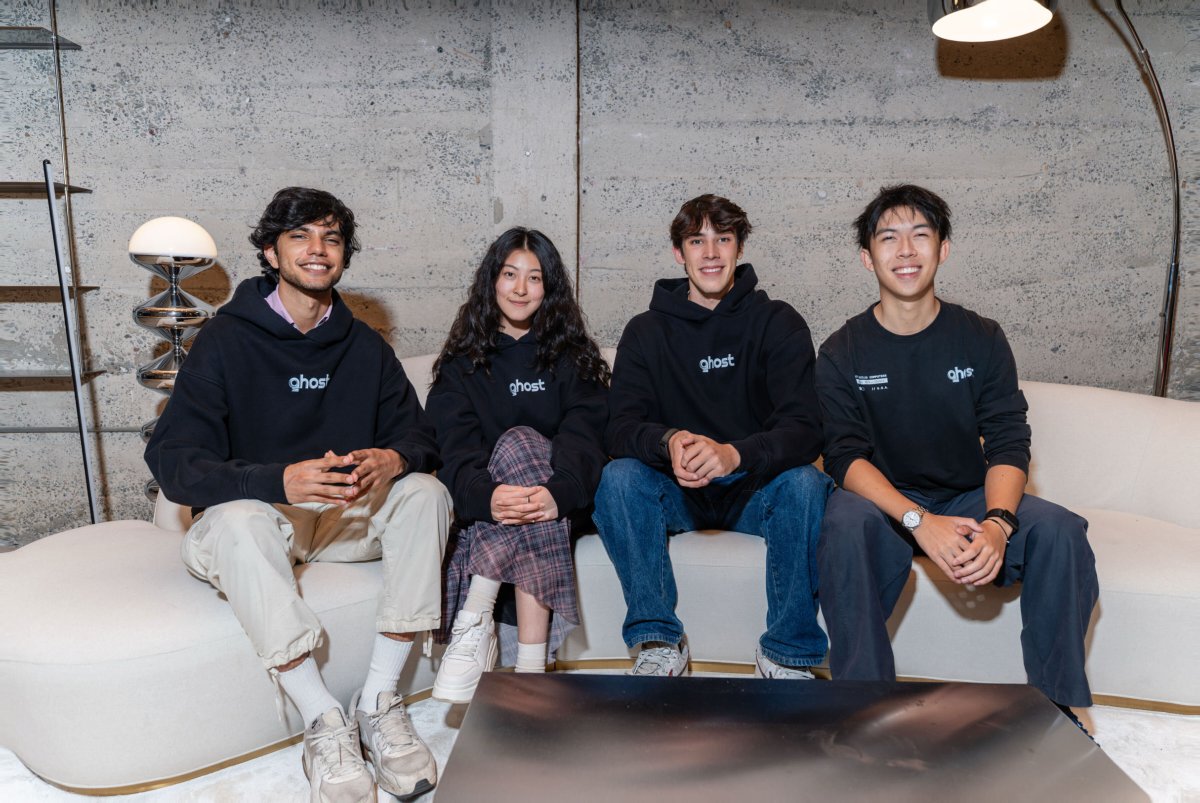
Now Javaid is throwing his hat into the ring with his company Ghost, which, after a year of building, announced Monday its official emergence from stealth and an $11 million seed round led by Andreessen Horowitz. His founding team includes Nicholas Chua, 19, Yifei Chen, 24, and Guatam Sharda, 23.
Ghost’s first product is Core, a personal computer designed specifically for AI agents. The idea is to centralize a person’s data — from what’s on their desktop to apps to smart home devices — into one piece of hardware designed to continuously run AI agents that can operate as an agentic assistant, perform tasks, and understand a person’s life. “You can run models on existing hardware, but it’s a terrible experience on many levels,” Javaid, the CEO, said.
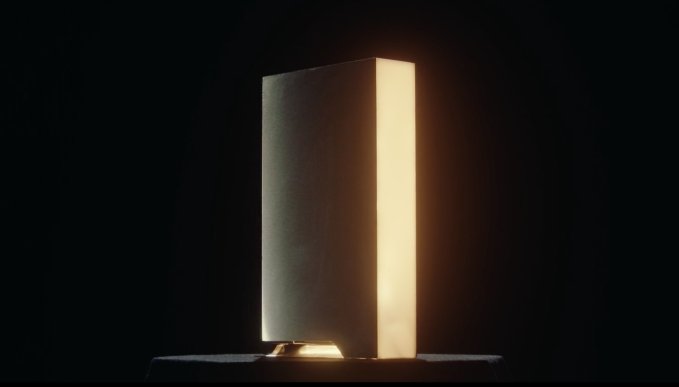
Core has its own GPU (so customers don’t have to purchase it separately), its own software layer, browser and filing system, and can continuously process information and tasks without constant prompting, Javaid said. The computer will be priced at $3,499, with the first batch available for pre-orders opening Monday and shipping scheduled for the last week of October.
He said to think of it like a brain box without a screen, accessible through a phone or app. Voice mode is also available, but one has to speak through the Core app rather than to the box itself. It runs three models — Qwen-3.8-Next, Qwen-3.8-27B and Gemma-4-31B — though Javaid said users can install other models from Hugging Face or their own model weights. Asked if this is somewhat of a Mac Mini, Javaid said the main difference is that Core’s hardware and software were built specifically around AI agent usage, with models already installed, whereas the Mac Mini is more general-purpose and can be configured for AI.
“As new models or improvements to existing models come out, we can push out over-the-air updates, similar to how Tesla works,” Javaid said of Core, adding that if a new generation of models comes out, then they ask a user if they want ot switch. “Users can also turn on auto-updates so they’re always running the latest generation of a given model.”
He and his team of four currently manufacture the units at their San Francisco facility. The goal, he said, is to sell a fully functioning smart computer that doesn’t require complex setup or configuration. The model and personal memory run locally, and all personal information is encrypted so no cloud providers or third parties, including Ghost, can access the memory in any meaningful way. Users can control how much autonomy they give their Core agents, and if Ghost shuts down, the device is programmed to keep working.
“All of the source code, logic, and model weights live on the device, not the services,” he said. “We build this device to not be dependent on having an outside entity maintaining the service.”
He said the team is also building a firewall around how the agent can use its credentials. The firewall “monitors every outgoing network request on the computer and if it sees the agent performing a sanctioned action or exfiltrating data it shouldn’t, it rejects the request and flags it for user review.”
“The user owns all of it,” he said of the device, memory, and data. “Once you buy the hardware, everything is stored, run, and processed on the device.”
He’s not too worried about the competition in the space. “People sometimes give incumbents credit for having already built the product because they have the ingredients,” he said. He credited Apple with good hardware and disruption, but said much of what Core is aiming to tackle is software: “the model reasons over your life, how it remembers, how it takes action, how it knows when to reach out,” he continued.
“For example, Core proactively sends you a notification that you might be getting sick because it sees your resting heart rate is elevated, sees from computer history that you were up late working on a project, and has seasonal context that it is flu season in San Francisco.”
The company’s main focus is building a product people love. “If we can’t do that. Apple isn’t the reason we failed,” he said. Other investors in the round include Abstract, Audacious Ventures, SV Angel, and Nova.
When you purchase through links in our articles, we may earn a small commission. This doesn’t affect our editorial independence.













Post Comment